
Guitar Chord Strumming Exercises
Build steadier strumming, tighter timing and better groove with focused play-along guitar strumming exercises. Train chord-based strumming patterns at fixed tempos, improve down-up coordination and develop smoother, more consistent rhythm while changing between chord shapes.

Guitar Chord Strumming Workouts
Train steadier strumming, tighter timing and better groove with focused play-along guitar strumming exercises.
The collection includes 48 repeatable chord strumming workouts designed to develop stronger rhythmic control while playing chords. Practise down-up strumming patterns at fixed tempos, keep your strumming hand moving consistently and build smoother chord changes without losing the beat.
Strumming Patterns
Train different down-up strumming patterns and develop more consistent rhythmic movement across complete measures and repeating phrases.
Down-Up Coordination
Build a steadier strumming motion and improve control of downstrokes, upstrokes, rests and accents while staying connected to the pulse.
Chord Changes in Rhythm
Practise moving between chord shapes without interrupting the strumming pattern, slowing down or losing your place within the beat.
Timing & Groove
Repeat chord-based rhythm patterns at different tempos and build tighter timing, smoother movement and a more consistent rhythmic feel.
How to Use These Chord Strumming Workouts
Start at a tempo where you can keep the strumming pattern steady while changing chords without breaking the rhythm. Focus on consistent down-up movement, accurate timing and smooth chord changes before increasing the challenge.
Choose a Chord Strumming Workout
Pick the strumming pattern and chord sequence you want to train and become familiar with both before starting the workout.
Keep Your Strumming Hand Moving
Maintain a steady down-up motion through the pattern and avoid stopping the strumming hand when rests, accents or chord changes appear.
Choose a Controlled Tempo
Start at a BPM where you can play the pattern clearly, keep the pulse steady and change chords without rushing or interrupting the rhythm.
Repeat and Build Strumming Consistency
Repeat the same pattern until the strumming motion, chord changes and rhythmic placement become more stable and reliable from one repetition to the next.
Press Play and Stay in Time
Follow the workout from beginning to end and keep the rhythm moving, even when a chord change is not perfect. Staying in time is more important than stopping to correct a missed change.
Increase the Challenge Gradually
When the pattern and chord changes stay controlled, increase the tempo or move to a more demanding strumming pattern while maintaining steady timing and continuous movement.
Free Guitar Chord Strumming Workout Preview
Watch short excerpts from the Guitar Workout Club chord strumming workouts.
These play-along workouts focus on steady strumming, accurate timing and smooth chord changes without interrupting the rhythm. Train different strumming patterns at different tempos, repeat the workouts regularly and build stronger groove, control and consistency.
Workout Details
- Focus
- Strumming, Timing & Chord Changes
- Preview
- Chord Strumming Workouts
- Tempo
- 60–120 BPM
- Workout Length
- 3–10 min
Guitar Chord Strumming Exercise FAQ
How can I improve my guitar strumming?
Practise simple strumming patterns at a fixed tempo and keep your strumming hand moving consistently. Focus on steady down-up motion, accurate timing and staying connected to the beat before increasing the tempo.
Should my strumming hand keep moving during rests?
In many strumming patterns, yes. Keeping the hand moving through the subdivision helps maintain a steady rhythmic motion, even when you pass over the strings without playing a stroke.
How do I change chords without stopping my strumming?
Start slowly and prepare the next chord while keeping the strumming motion continuous. If a change is imperfect, keep the rhythm moving instead of stopping to correct it and gradually make the transition cleaner.
How should I practise guitar strumming patterns?
Learn the rhythmic motion first, then repeat the pattern at a controlled tempo until it feels consistent. Add chord changes while keeping the same pulse, subdivision and strumming movement from beginning to end.
What is the difference between chord strumming and chord progression practice?
Chord progression practice focuses mainly on moving smoothly through a sequence of chords. Chord strumming practice adds the rhythmic pattern, so you must change chords while keeping the strumming motion, timing and groove consistent.
Should I practise strumming slowly or at full speed?
Start at a tempo where the pattern, chord changes and timing remain controlled. Increase the BPM gradually once you can repeat the complete pattern without stopping, rushing or losing the beat.
Continue Your Guitar Workout
Chord strumming workout finished? Continue training with another focused guitar workout.
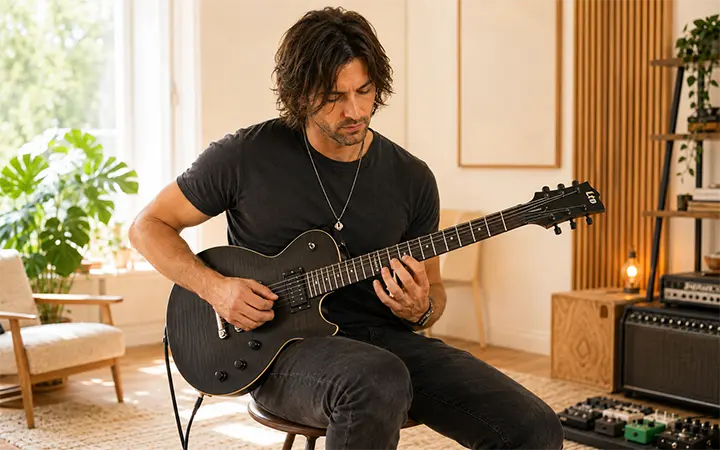


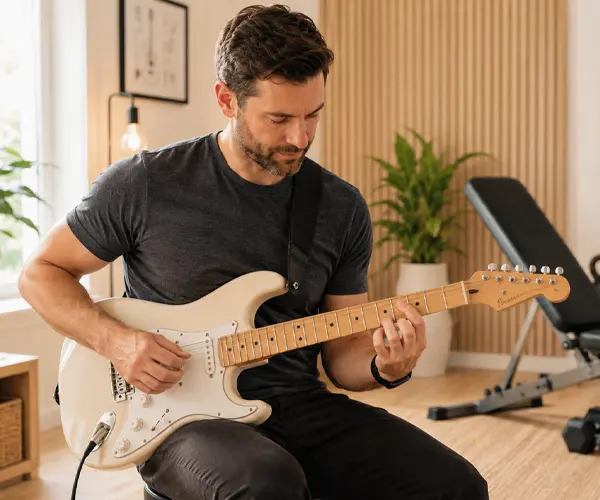
Built for Practice, Not More Theory
Guitar Workout Club was created by Wouter Baustein, guitarist, music producer and guitar coach with more than 25 years of teaching and coaching experience.
One thing becomes clear when working with guitarists at different levels: knowing a strumming pattern is not the same as being able to keep the motion steady, change chords smoothly and stay locked to the beat from beginning to end.
These chord strumming workouts are built around controlled repetition. By practising strumming patterns with chord changes at fixed tempos, you develop steadier down-up movement, tighter timing, smoother transitions and more consistent groove without stopping the rhythm when the chords change.
Play. Train. Progress.
Designed from real teaching experience. Built for actual practice.
Ready to Train Your Chord Strumming?
Choose a chord strumming workout, press play and train steadier down-up motion, tighter timing, smoother chord changes and more consistent groove at different tempos.
Get access to the complete Guitar Workout Club library and keep building your playing with structured workouts you can repeat, challenge and progress over time.
Join Guitar Workout Club ➜Play. Train. Progress.